
If you are choosing a color for your home’s exterior, one of the smartest questions you can ask is:
Which exterior paint color fades the fastest?
The short answer is this:
Bright, highly saturated colors usually fade faster than more muted or neutral tones—especially in strong sun and harsh Texas weather.
In our experience, the colors most likely to fade faster include:
bright reds
vivid yellows
bold oranges
some bright blues
highly saturated dark colors in full sun
At The Proud Paintbrush, we help homeowners across Sugar Land, Missouri City, Richmond, Katy, Fulshear, and surrounding areas choose exterior colors that not only look good on day one, but still look strong years later.
Because when it comes to exterior paint, color is not just a design decision. It is also a durability decision.
Schedule Your Painting EstimateWhy Some Exterior Paint Colors Fade Faster Than Others
Not all paint colors age the same way.
Some colors hold their appearance better over time, while others lose their richness much faster.
That usually comes down to a few things:
how stable the pigment is
how much UV exposure the home gets
how intense or saturated the color is
how much heat the surface absorbs
the quality of the paint itself
how well the surface was prepped before painting
So while color matters, it is not just the color name that determines fading. It is the full system.
Exterior Paint Colors That Usually Fade the Fastest
These are the categories that most often show early fading, especially on homes exposed to strong Texas sun.
1. Bright reds
Bright reds are one of the most common fast-fading exterior colors.
Why?
Red pigments often struggle more with long-term UV exposure. That means they can lose richness faster and shift in appearance sooner than more stable neutrals.
This is especially true on:
front doors in full sun
south-facing siding
trim and accents that get intense exposure
2. Vivid yellows and golds
Yellows can be beautiful, but highly saturated yellows and golds often fade faster than homeowners expect.
They can start to look washed out or uneven over time, especially if the home gets heavy sunlight throughout the day.
3. Bright oranges and terracotta tones
Orange-based colors, terracotta shades, and colors with strong red-orange warmth often have similar issues.
These colors may still work beautifully, but they usually require a more careful product choice and realistic expectations about long-term color retention.
4. Some bright blues
Not all blues fade quickly, but very bright, intense blues can lose depth over time in direct sun.
This is different from more muted blue-grays or navy tones, which often hold up better when paired with the right paint system.
5. Highly saturated dark colors in full sun
This surprises some homeowners.
Dark colors do not always “fade the fastest” in the same way bright reds or yellows do, but they can show wear differently.
On exteriors, bold dark colors can:
absorb more heat
stress the surface more
show chalking or dullness sooner
highlight uneven fading more clearly
So while a charcoal or deep navy may technically hold better than a bright red, dark colors still need the right product and the right expectations.
Exterior Paint Colors That Usually Hold Up Better
While there is no zero-fade option, some color families tend to age more gracefully.
These often include:
1. Soft neutrals
Colors like:
beige
taupe
greige
soft gray
warm off-white
often hold their appearance well because they are less saturated and less likely to show dramatic fading.
2. Muted earth tones
More toned-down natural colors often perform well because they are less intense and easier for the paint system to maintain visually over time.
3. Blue-grays and green-grays
Cooler, muted tones often hold up better than highly saturated warm colors.
These can be a great fit for Texas exteriors when homeowners want color without going too bold.
4. Mid-tone grays
Mid-tone grays often strike a good balance between style and durability.
They tend to hide aging better than bright colors and can work well across many home styles.
Does White Exterior Paint Fade?
White is a little different.
White may not “fade” the same way bold colors do, but it can still show age through:
chalking
yellowing
dirt pickup
mildew staining
uneven weathering
So while white is often a timeless choice, it is not maintenance-free.
What Matters More Than the Color Itself
This is where most homeowners make the biggest mistake.
They focus only on the color, when the real long-term result depends just as much on:
paint quality
surface prep
primer use
application method
climate exposure
surface type
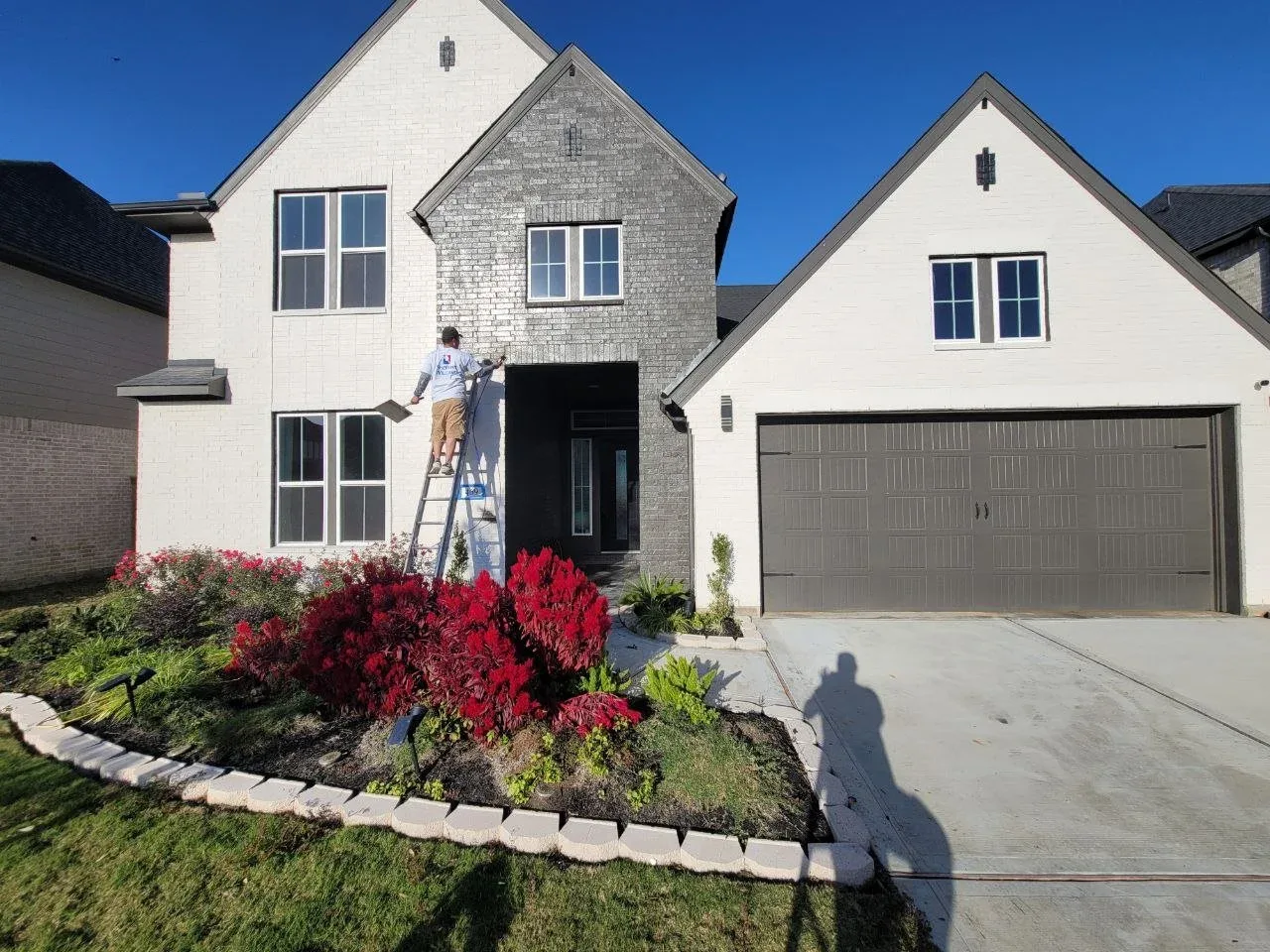
A well-prepped home painted with a premium exterior coating will usually outperform a poorly prepped home no matter what color is chosen.
That is one reason we always say:
Prep is a process, not a step.
Learn About Our Exterior Painting ProcessWhat We See on Homes in Sugar Land and Fort Bend County
Homes in Sugar Land, Missouri City, Richmond, Katy, and surrounding areas deal with serious exterior stress:
intense UV exposure
humidity
heavy rain
heat buildup on stucco and siding
long summer seasons
varying surface materials like brick, stucco, siding, and trim
In this climate, the wrong color and the wrong paint system can age fast.
We often see faster fading on:
front doors with full afternoon sun
bright accent colors on trim
highly saturated exteriors on west-facing walls
builder-grade paint jobs with limited UV resistance
That is why exterior color selection should always be tied to your home’s conditions—not just a paint chip.
If You Love a Color That Fades Faster, You Still Have Options
This is important.
A color being more fade-prone does not mean you should never use it.
It just means you should make a smarter decision about:
product quality
sheen
surface placement
how much exposure that area gets
your expectations for maintenance and longevity
For example, a bold red front door may still be a great choice.
A fully sun-exposed bright yellow exterior may need more thought.
Sometimes the answer is not “change the color completely.” Sometimes the answer is:
choose a more muted version
move it to an accent area
upgrade the paint system
limit it to a lower-exposure surface
How We Help Homeowners Choose Better Exterior Colors
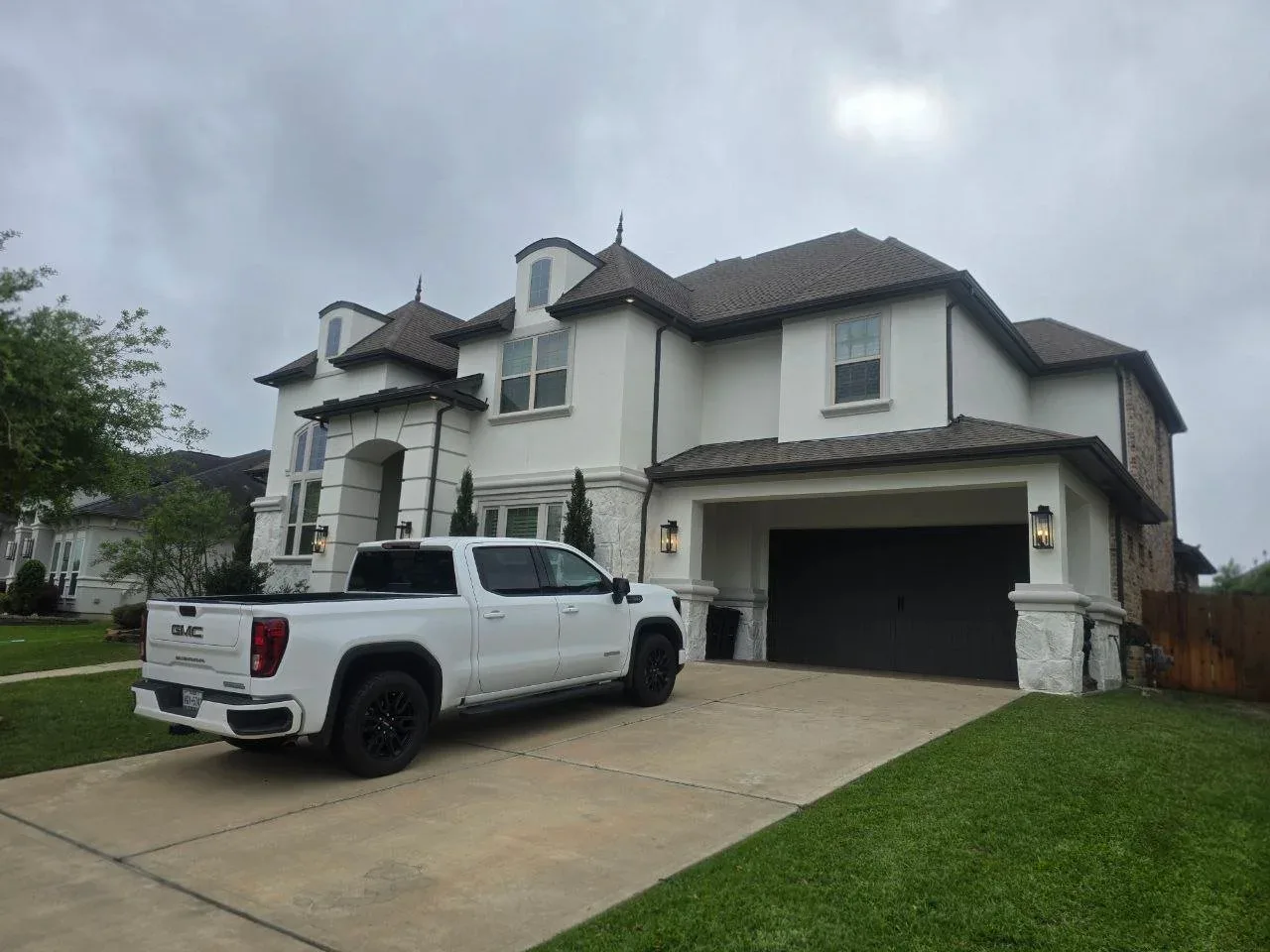
At The Proud Paintbrush, we do not just help homeowners choose colors that look good. We help them choose colors that make sense for:
the style of the home
the surface being painted
the amount of sun exposure
the climate
the level of maintenance they want
the long-term result they expect
That often means balancing aesthetics with performance.
A bold color may look amazing on the sample card. But if it is going on a west-facing stucco wall in Texas, the smarter move may be to shift slightly toward a more durable version of that color family.
That is the kind of guidance that helps homeowners avoid regret later.
See Our Exterior Painting PortfolioFrequently Asked Questions
Which exterior paint color fades the fastest?
In many cases, bright reds, vivid yellows, oranges, and other highly saturated colors tend to fade faster than muted or neutral tones.
Do dark exterior colors fade faster?
Sometimes they show wear differently. Dark colors absorb more heat and can show chalking, dullness, or uneven aging more clearly in full sun.
Does white exterior paint fade?
White may not fade dramatically like bold colors, but it can still show weathering through chalking, yellowing, dirt, and mildew.
What exterior paint colors last the longest?
Soft neutrals, muted earth tones, blue-grays, green-grays, and mid-tone grays often age more gracefully.
Does paint quality affect fading?
Yes. Premium exterior paints with strong UV resistance and proper prep usually hold color much better over time.
Need Help Choosing an Exterior Color That Will Last?
Choosing an exterior color is about more than what looks best today.
It is also about:
how the color will age
how much sun the home gets
what surface is being painted
how much maintenance you want
how long you want the finish to look strong
At The Proud Paintbrush, we help homeowners make smarter exterior painting decisions based on real-world Texas conditions.
Whether you are repainting brick, stucco, siding, trim, or the full exterior, we can help you choose a system and color strategy that looks good now and holds up later.
Schedule My Painting EstimateRelated Pages and Helpful Resources
You may also want to visit:
Final Thoughts
If you are wondering which exterior paint color fades the fastest, the safest answer is this:
Highly saturated colors usually fade faster than muted or neutral ones—especially in strong Texas sun.
But the full answer is bigger than that.
The long-term result depends on:
the color
the pigment stability
the surface
the paint quality
the prep
the exposure
That is why the best exterior color choice is not just about style. It is about choosing a color and system that work together for your home.
Wood fences take this same UV beating — bare cedar and pine gray out even faster than painted siding. If your fence is overdue for protection, see our fence staining in Sugar Land or fence staining in Katy.
 Chris Petkau