
What Really Drives the Cost of Interior Painting (Without Talking Prices)
When homeowners start thinking about painting their interior, one question quietly sits underneath everything else:
Why do painting quotes vary so much?
This article answers that—without numbers—by breaking down what actually drives the cost behind a painting project, so you can evaluate any quote with clarity and confidence.
It’s Not Just Paint — It’s the Process Behind It
Most people assume paint is the main factor.
It isn’t.
The real driver is everything that happens before the paint ever touches the wall. The prep, the protection, the repairs, the attention to detail—these are the invisible parts of a project that separate a quick repaint from a long-lasting finish.
Two homes can look identical on the surface, but require completely different levels of preparation.
That’s where cost differences begin.
Surface Condition Changes Everything
The condition of your walls, ceilings, and trim has a direct impact on the work required.
A clean, well-maintained surface is straightforward.
A surface with cracks, stains, previous patchwork, or heavy texture requires significantly more effort to make it look right.
Some common factors that affect surface condition:
Hairline cracks or settling damage
Previous poor patchwork
Water or smoke staining
Uneven textures or repairs
These aren’t “extras”—they’re foundational to the final result. Skipping them might lower upfront cost, but it almost always shows later.
Labor Is the Biggest Variable (Not Materials)
Paint is consistent. Labor is not.
The biggest difference between quotes often comes down to how much time and skill is being invested into the project.
That includes:
How thoroughly surfaces are prepped
How carefully areas are masked and protected
How many coats are applied and how they’re applied
The level of detail around trim, edges, and transitions
A faster approach may reduce time on-site. A slower, more methodical approach usually focuses on durability and consistency.
This is why two quotes can look similar on paper but lead to very different outcomes.
The Level of Finish You Expect Matters
Not all paint jobs are aiming for the same result.
Some homeowners want a clean refresh.
Others want a near-flawless finish where imperfections disappear and everything looks intentional.
That expectation changes the scope of work.
Higher-end finishes often require:
More detailed surface correction
Additional sanding between steps
Tighter attention to edges and lines
More time spent achieving uniform coverage
The difference isn’t just visual—it’s in the level of craftsmanship applied throughout the process.
Project Complexity Impacts Time and Execution
Every home has its own layout challenges.
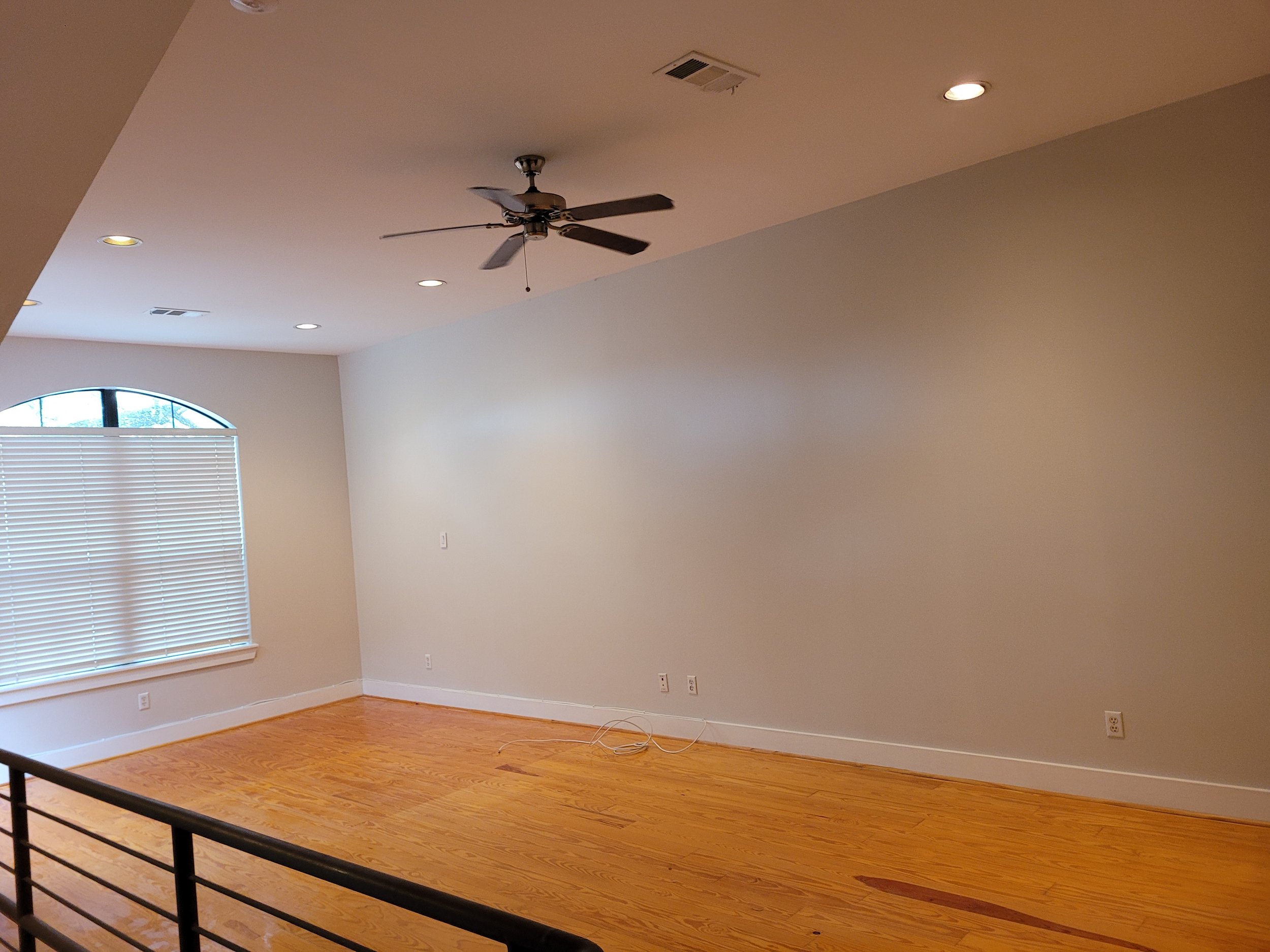
Open floor plans, vaulted ceilings, detailed trim work, built-ins, or tight spaces all change how a project is executed.
For example:
High ceilings require additional setup and safety considerations
Detailed trim increases time for precision work
Occupied homes require careful staging and daily resets
Multi-room color transitions require more planning and control
Complexity doesn’t always show in square footage—but it shows in the workflow.
Environment and Lifestyle Play a Role
Your home isn’t just a structure—it’s a lived-in space.
Factors like pets, children, work-from-home schedules, or sensitive health considerations can influence how the project is approached.
In areas like Sugar Land and throughout Fort Bend County, many homes are actively lived in during painting. That means:
More time spent protecting furniture and flooring
More coordination around daily routines
More attention to cleanliness and containment
These details don’t change the final color—but they do affect how the work gets done.
Why Painting Quotes Can Feel Inconsistent
When you step back, the variation in quotes starts to make sense.
Different painters may be:
Including different levels of prep
Approaching surface repairs differently
Using different application methods
Planning for different finish standards
If those details aren’t clearly defined, it’s easy for quotes to feel confusing or even inconsistent.
The key isn’t just comparing totals—it’s understanding what’s actually included in the process.
What affects interior painting cost?
Interior painting cost is driven by surface condition, level of preparation, labor time, project complexity, and desired finish quality—not just materials.
A Practical Way to Evaluate Any Painting Quote
If you’re reviewing multiple options, here’s a simple way to think about it:
Instead of asking “Why is this cheaper?”
Ask “What might be missing?”
Instead of asking “Why is this higher?”
Ask “What additional steps are included?”
This shift in thinking helps you compare projects based on process and outcome, not just price.
It also helps you avoid surprises after the project starts.
The Real Takeaway
Interior painting isn’t a single product—it’s a layered process.
And the cost reflects:
The condition of your home
The level of detail in preparation
The time and skill applied during execution
The quality of the final finish you expect
Once you understand that, painting quotes stop feeling random—and start becoming easier to evaluate.
Who This Is Helpful For
This article is helpful for homeowners who are trying to understand why painting quotes vary and want to make a confident, informed decision.
It’s especially useful for those comparing options and looking to understand what actually goes into a professional interior painting project.
